





Bone-anchored hearing aids
BAHA (Bone-Anchored Hearing Aid)
The BAHA (Bone-Anchored Hearing Aid) is a bone-anchored hearing aid.
Principle of Sound Transmission
Physiological Sound Transmission
Physiologically, speech and sounds are picked up by the outer ear in the form of sound waves. These cause the eardrum to vibrate. The vibrations are transmitted to the inner ear via the ossicular chain in the middle ear. There, they are converted into electrical signals, which are transmitted to the brain via the auditory nerves. This is where the sensation of hearing occurs.

Source: Cochlear Ltd.
In cases of hearing loss, sound is amplified using conventional hearing aids, which are worn either behind the ear (BTE) or in the ear (ITE). The amplified sound signal is also transmitted through the middle ear to the inner ear. In cases of anatomical malformations, chronic inflammation, or radical cavities, treatment with a conventional hearing aid is not possible. This is where the BAHA comes into play.
Sound Transmission with the BAHA
The sound picked up by the hearing aid is transmitted through the bone to the inner ear, bypassing the ear canal and the middle ear. To ensure optimal sound transmission, the hearing aid is connected to a bone anchor (Baha Connect System, Cochlear), which is inserted into the bone behind the ear in the form of a small screw. It is also possible to connect the speech processor and the implant magnetically (Baha Attract System, Cochlear). For young children aged 0–4 years, implantation of the bone anchor is not yet feasible without complications, as the bone is still very thin. In such cases, the hearing aid can be placed in a headband. It is also possible to attach the speech processor to the bone behind the ear using an adhesive pad (ADHEAR, manufactured by MED-EL).


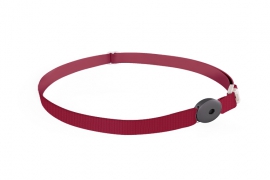
Source: Cochlear Ltd.
For more information, visit:
https://www.cochlear.com/de/de/home/products-and-accessories/cochlear-baha-system
https://www.medel.com/de/hearing-solutions/bone-conduction-system
Indications
1. Severe ear malformations with a closed external auditory canal
2. Chronic external auditory canal infections
3. Middle ear conditions that cannot be treated surgically
4. Post-radical surgery with recurrent inflammation
5. Unilateral hearing loss (CROS system)
Surgical aspects
In a minor procedure (under local anesthesia for adults, under general anesthesia for children), a small area of skin behind the ear is exposed and thinned. A 3–4 mm long titanium screw is implanted into the bone.
After a healing period of approximately three months, a spacer sleeve with a snap-on coupling is placed over the bone anchor. To do this, the skin over the titanium screw is excised in a second procedure.
Once the wound has healed, the hearing aid can be fitted.
Follow-up Care
The digital hearing aid is fitted by a hearing aid specialist.
To prevent inflammation and complications, proper care of the skin around the bone anchor is particularly important. The treating physician will provide instructions on this.
Bonebridge
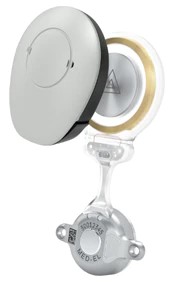
The Bonebridge (manufactured by MED-EL) consists of the implant and the speech processor worn on the outside of the head. The speech processor is attached to the implant via a magnet. The implant converts acoustic signals into mechanical vibrations and transmits them to the skull. These vibrations stimulate the inner ear, and the sound is then transmitted to the auditory nerves. Patients with conductive hearing loss or mixed hearing loss benefit from this hearing solution. We would be happy to advise you during our hearing rehabilitation consultation hours. You can find more information here: https://www.medel.com/de/hearing-solutions/bonebridge.